
Searching Johnson County Civil Dockets
For a remote search, Nebraska Judicial Branch JUSTICE case information is the statewide route. It covers eligible Johnson County civil case records. A one-time search through Nebraska.gov costs $17, match or no match. It can return up to 30 records. Access lasts three calendar days. Prefer to skip the fee? A public JUSTICE terminal sits in the courthouse or a listed law library. It is free to use in person. For a hearing date rather than case history, check the calendar separately.
Start with a party name. Narrow by Johnson County, court type, year, and civil case type only when each one is known to you. The JUSTICE classifications include Civil, Small Claims, Probate, and others. A surname alone often pulls too many matches. A wrong middle initial can hide the case you want. Write down the case number, court, caption, filed or closed date, and the event you need before calling the clerk. The Johnson County Case Lookup path explains the broader search approach.
- Choose the JUSTICE search channel or use a public terminal for a free in-person search.
- Enter the party name and select Johnson County, then choose County Court or District Court when the court level is known.
- Use year, case type, subtype, judge, or attorney filters only to refine a likely result.
- Open Details and verify the caption, case classification, court, judge, and dates before reading the Register of Actions.
- Keep the exact event and document information for a clerk request if the needed filing or certified copy is not public online.
Note: A fresh Johnson County civil filing can take up to 24 hours to show up in the one-time JUSTICE search.
Johnson County Civil Docket Court Choice
Which court level holds the case? That is the first decision in any Johnson County civil docket search. Johnson County Court handles county civil disputes, small claims, probate, guardianship, conservatorship, and adoption. Related county-court work sits there too. Nebraska Judicial Branch material gives county court concurrent civil jurisdiction with district court in specified matters. The ceiling is $70,000. Larger civil claims, domestic relations, district appeals, and other assigned matters belong to the 1st Judicial District Court.
| Johnson court | Common civil docket route | Search cue |
|---|---|---|
| Johnson County Court | County civil, small claims, probate, guardianship, conservatorship, adoption | Select County Court, then use CI, SC, PR, or the available subtype. |
| 1st Judicial District Court | District civil, domestic relations, district appeals, and assigned district matters | Select District Court and confirm the displayed classification and caption. |
Nebraska's district-court record-maintenance rule spells out the district register, trial docket, judge's notes, indexes, and case file.
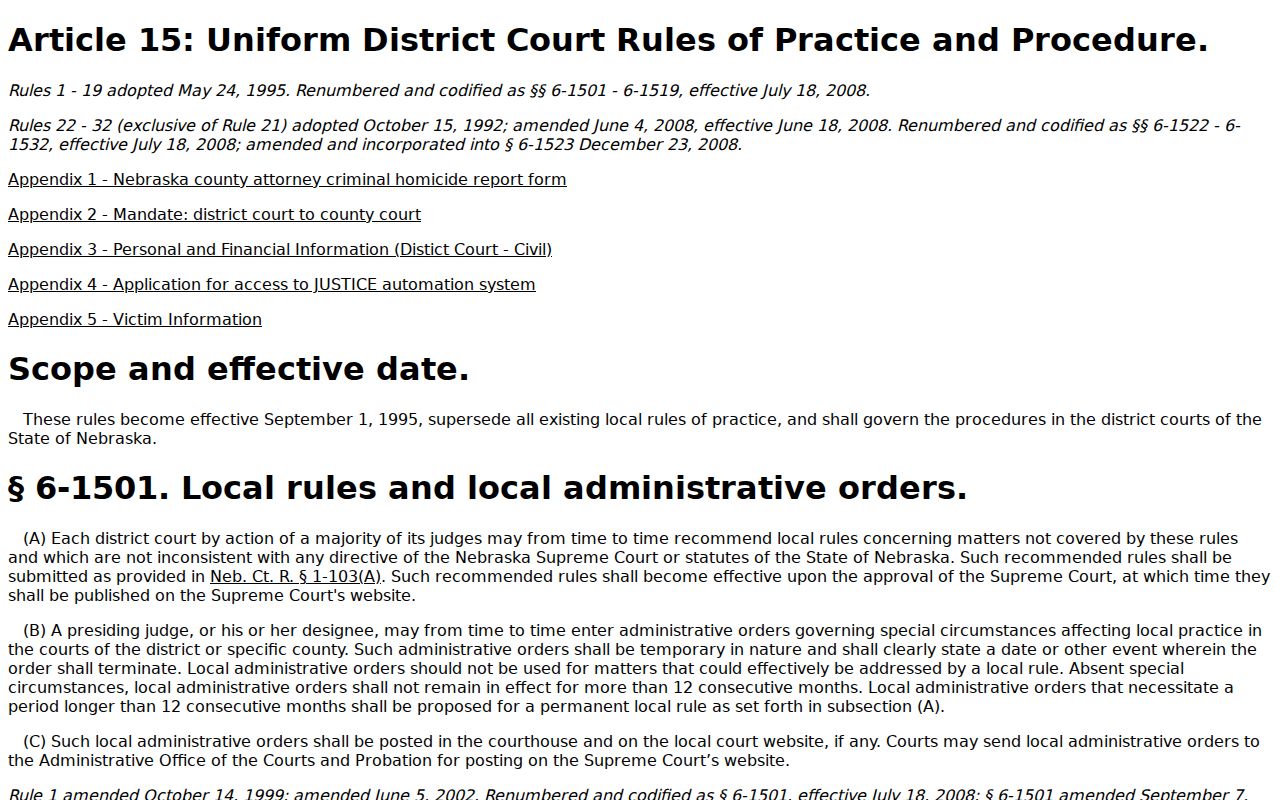
That rule explains the relationship. A Johnson County civil docket entry and the district case file are connected records, but they are not one and the same.
Inside a Johnson County Civil Docket
A civil docket in JUSTICE is built in layers. The official demonstration separates a Case Summary from Parties and Attorneys, Judgment Information, Court Costs Information, Financial Activity, and the Register of Actions. The Case Summary carries the court, case ID, caption, judge, classification or subtype, filed and closed dates, and disposition. Below it, the register logs dated activity. Expect entries like a complaint or praecipe, summons, return, motion, default judgment, notice, garnishment process, satisfaction, or a staff note. Exact labels vary by case.
| Case Summary | Court, case number, caption, judge, classification, filed date, closed date, and disposition. |
|---|---|
| Parties and Attorneys | Public party role or status, attorney and firm information, and aliases when shown. |
| Judgment Information | Judgment type, principal, interest, satisfaction, creditor or debtor, fees, and post-judgment costs. |
| Costs and payments | Cost account, date, amount, trust activity, payments to court, and payments made by court. |
| Register of Actions | Event date and description, initiating party, document number, service details where relevant, and image ID. |
The official civil case demonstration lays out these groups using dummy information rather than a Johnson County party record.
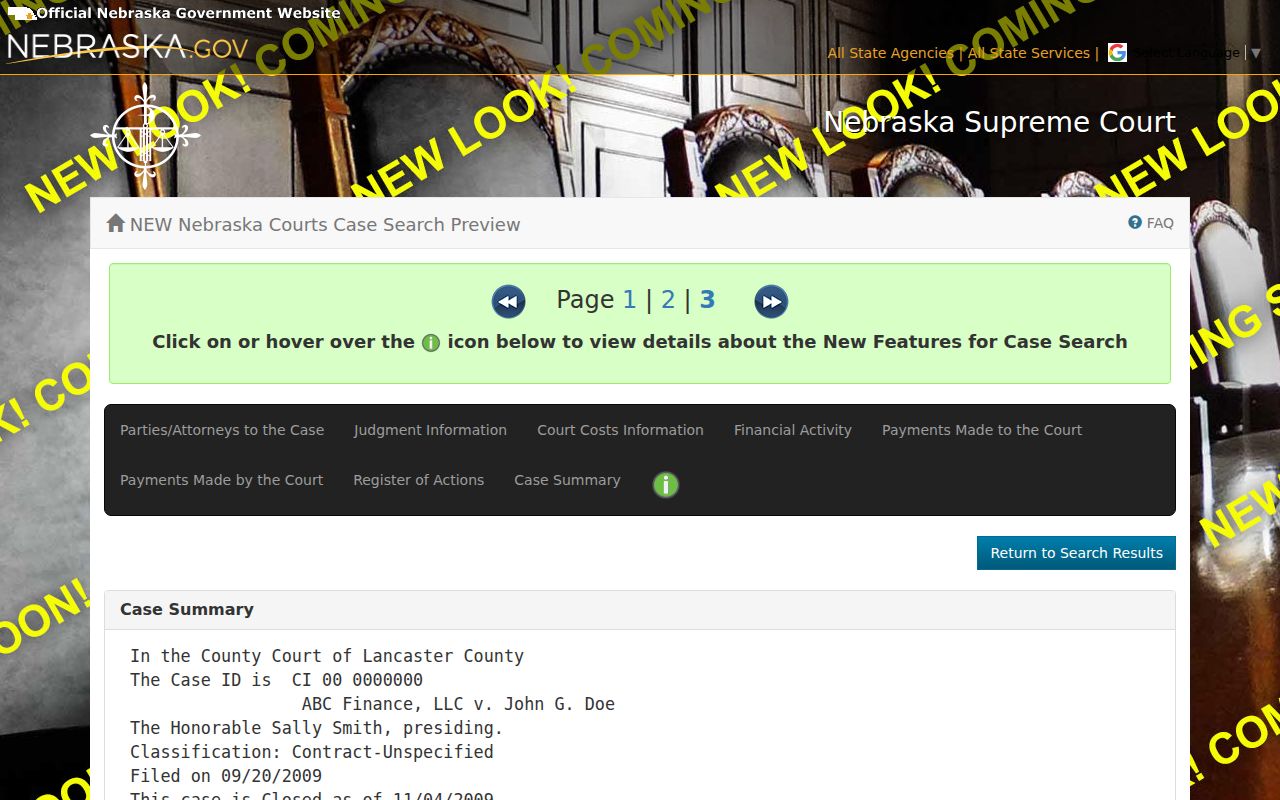
This structure helps a reader keep event history separate from the court's financial and judgment information.
Johnson County Civil Docket Record Layers
Three docket entries answer three different questions. A judgment entry records the court's determination. Financial Activity tracks money paid to or by the court, while a satisfaction entry can show that a judgment was paid or otherwise resolved. A closed date is not a satisfaction date, either. Read each group on its own terms. One financial line never tells you the final status of the whole civil matter.
- Praecipe
- A written procedural request or direction to the clerk that can appear in a civil register.
- Default judgment
- A judgment entered when a party does not respond or appear as required, subject to court rules.
- Garnishment
- A post-judgment or collection process entry directed to property or funds.
- Satisfaction
- An entry that a judgment has been paid or otherwise satisfied.
Images are a separate question again. A Register of Actions event can be visible even when the supporting filing is not a public online image.
Civil Case Types on the Docket
Civil entries in Johnson County span county civil disputes, small claims, probate, guardianship, conservatorship, adoption, and district-level civil or domestic-relations matters. Treat case type as a routing tool. It does not promise that every detail is public. Probate and protective proceedings, for instance, can carry access sensitivities. Use the court and classification JUSTICE displays. Then read the Register of Actions for the Johnson County case, to see which event or document is actually in question.
| Type | Usual Johnson docket level | Useful record reading point |
|---|---|---|
| County civil | County Court | Check complaint, service, motions, judgment, and any later satisfaction. |
| Small claims | County Court | Use the simplified civil docket, then identify the judgment date for any appeal question. |
| Probate or protective matter | County Court | Expect the clerk to control access to restricted material beyond a public case summary. |
| District civil or domestic relations | District Court | Confirm the court and the district case file before seeking a document. |
Nebraska's county-court sealing authority shows that public access to a civil docket has legal limits.
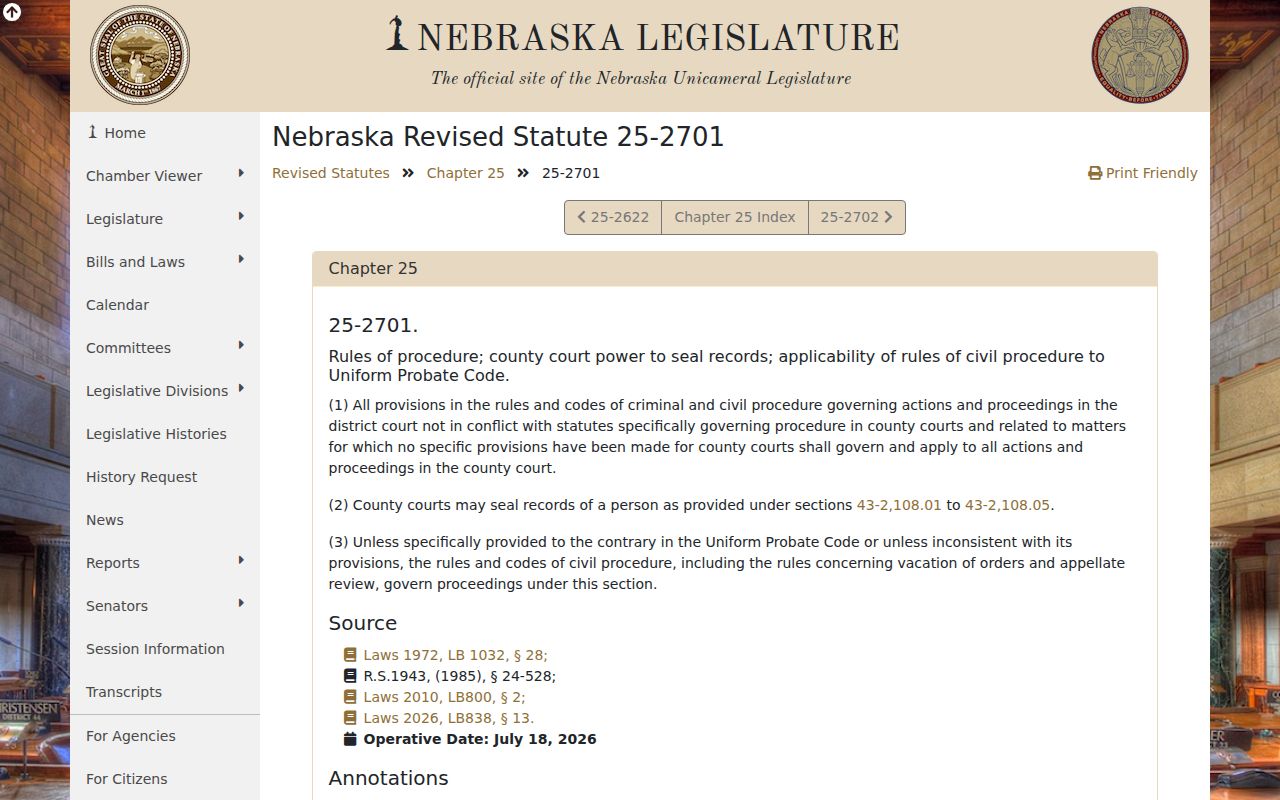
That authority is worth remembering. Ask the clerk about a specific public-access question rather than inferring access from the case type alone.
Johnson County Civil Docket Counts and Claims
How busy are these dockets? The Nebraska Judicial Branch FY2025 county-court report counts 196 civil matters and one small-claims matter for Johnson County. The district-court report lists its own load. It counts 35 civil matters, 21 domestic-relations matters, 16 protection orders, nine administrative appeals, and two appellate actions. Those district numbers mean a search should not stop at County Court when the case may sit at the district level. Keep in mind these are workload counts. They say nothing about how many individual people or disputes they represent.
Nebraska's civil and small-claims appeal instructions map the official route from a county-court judgment to district review.
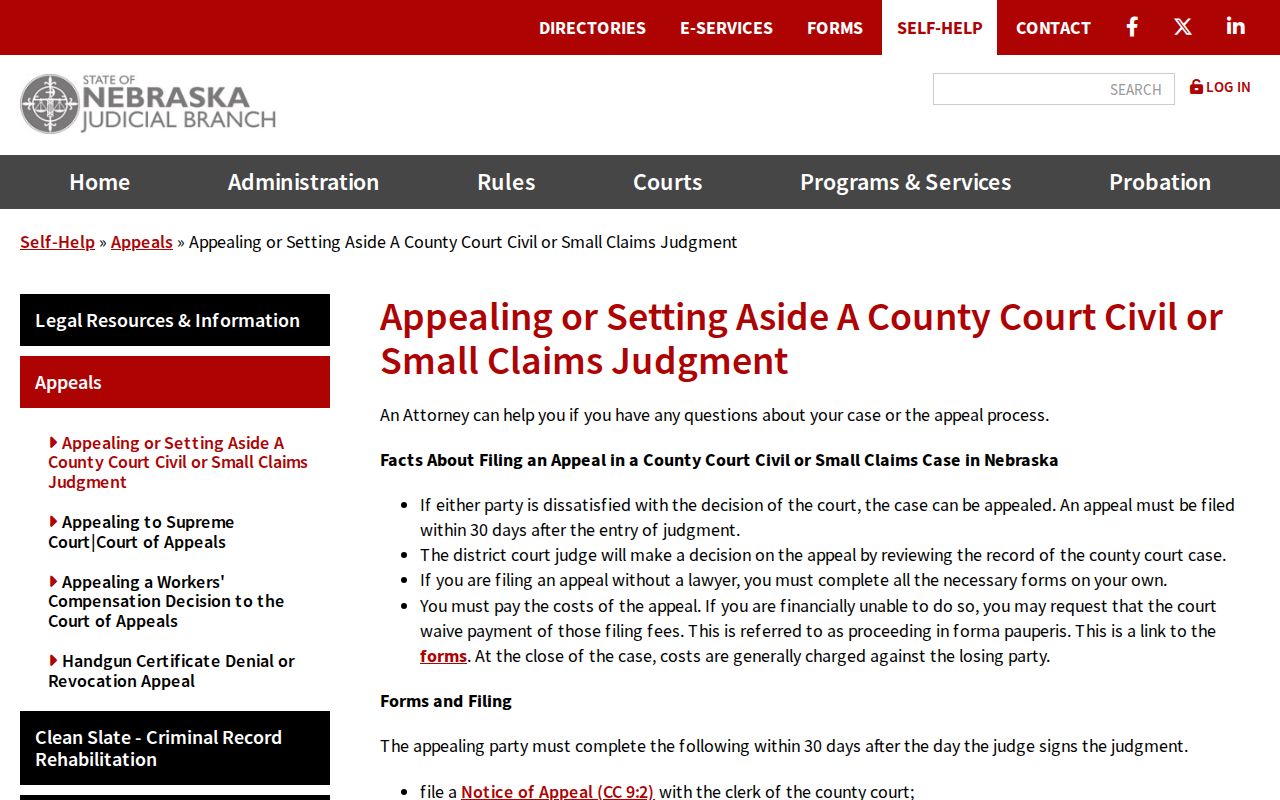
The appeal material fits the counts. A county-court judgment can open a new district-level procedure on top of the original case.
Civil Docket Settings and Hearings
A Johnson County civil setting is a dated court event on the docket. It is not always the final hearing. The entry might describe a motion hearing, a default or judgment hearing, a small-claims hearing, probate or guardianship, a protection-order hearing, a status conference, or a trial setting. Read it in context. Match the entry to date, time, court, and judge. Add the case number and any continuation notation on the same line. The public calendar helps, but it stays separate from each case's own Register of Actions.
Need a hearing date fast? Check the calendar, then the case register, then confirm anything unclear with the right Johnson County clerk. Small claims and county civil matters usually sit under the County Court calendar. District Court covers district civil and domestic-relations cases. Watch for continuances, vacated settings, new settings, or passed events, since any of those can shift the real appearance date.
Note: a public calendar result is not certified notice. A no-result warning does not prove that no hearing exists.
Johnson County Civil Docket Garnishment
A garnishment entry shows procedural movement in the civil docket, nothing more. It does not lay out the whole dispute or the current balance. Begin with the case identity. Then work backward through the Register of Actions: the initiating pleading, service, motions, judgment, and any post-judgment entries. After that, review Judgment Information, Court Costs Information, Financial Activity, and any satisfaction entry. Weigh each on its own terms. Each piece answers a different question.
Is a complaint, judgment, return, or garnishment document not linked? Call the Johnson County clerk with the court, case number, event date, and document number if displayed. Say whether you want a plain copy or a certified copy. Remember two limits. A public online result does not promise that every pleading is image-available. A case's closed date does not mean its judgment was satisfied.
Civil Docket Access Rules
Nebraska's court-records rules govern what the public may see in a Johnson County civil docket. So does the Nebraska Public Records Act framework. Through JUSTICE, a docket search can return a case summary, the parties, judgment and financial information, and Register of Actions entries. It can also return qualifying document images. Some limits still apply. Sealed cases, protected information, restricted records, retention limits, and nonpublic images can all trim what appears. Treat the docket as a chronological index. It never replaces the filed document or a certified court record.
To search a public terminal in person, the Nebraska Judicial Branch lists courthouses. It also lists selected law libraries. For official copies, the right Johnson County clerk can explain availability, certification, prepayment, and mailing. The clerk can also say whether a formal request applies. Fees are set by statute. A plain photocopy from Johnson County Court costs 25 cents per page. A certificate and seal adds $1 on top of the photocopy charge. Ask about current handling or delivery charges before you pay, because those sit outside the statutory amounts.
Neb. Rev. Stat. §33-126.05 sets out the county-court copy and certification amounts in full.
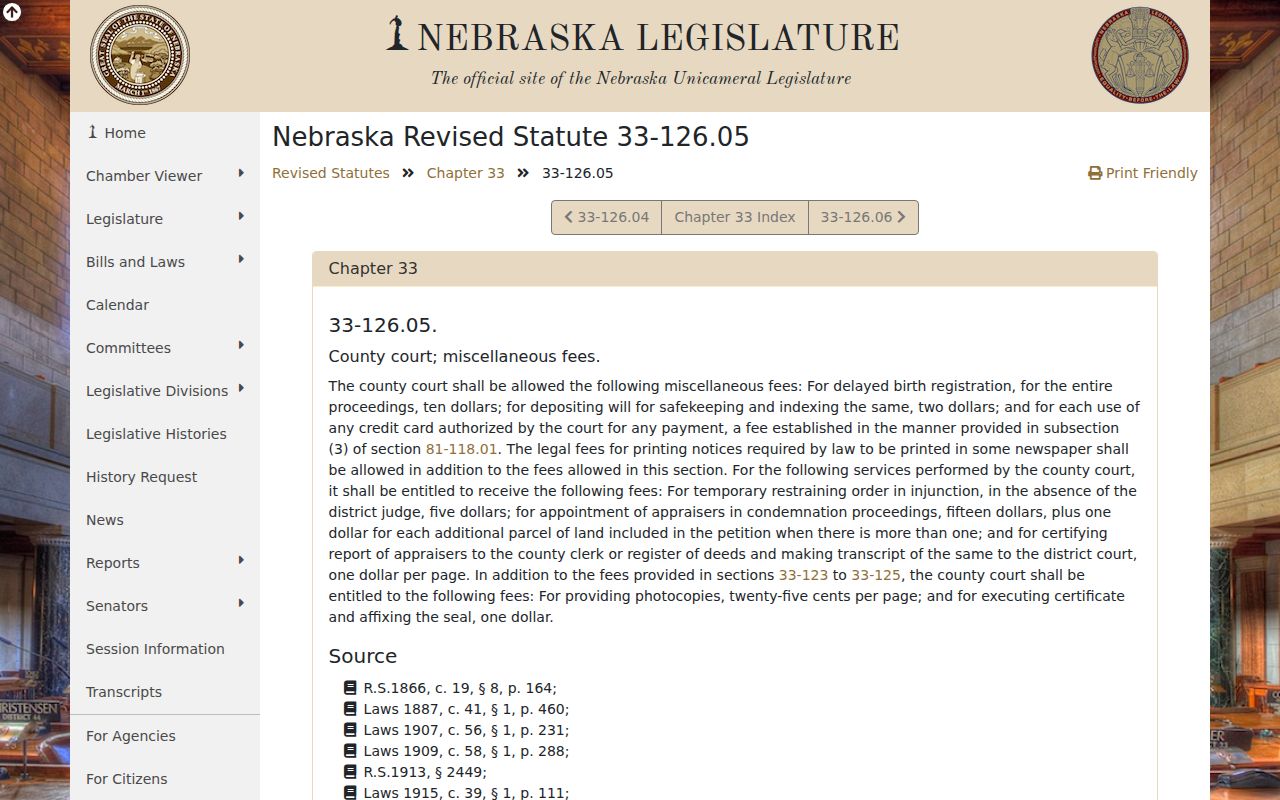
That statutory fee line marks the line between a free public case lookup and a clerk-issued paper or certified civil record.
Johnson County Civil Docket Copies and Appeals
Appealing a county-court civil or small-claims judgment? Nebraska's official self-help instructions say to file the notice within 30 days after judgment. Pay the district-court docket fee. Request a transcript and bill of exceptions where they apply. Pay any required deposits. Small claims adds a $50 appeal bond under those instructions. Keep the original case number handy when you contact both clerks, because an appeal opens a new procedural route rather than relabeling the old docket entry.
Nebraska's civil and small-claims appeal instructions give the official route, and the related county-court appeal forms cover the notice, transcript, and bill-of-exceptions paperwork. The clerk can confirm current filing requirements and cost estimates.